Demystifying Construction Lumber Wood for Builders
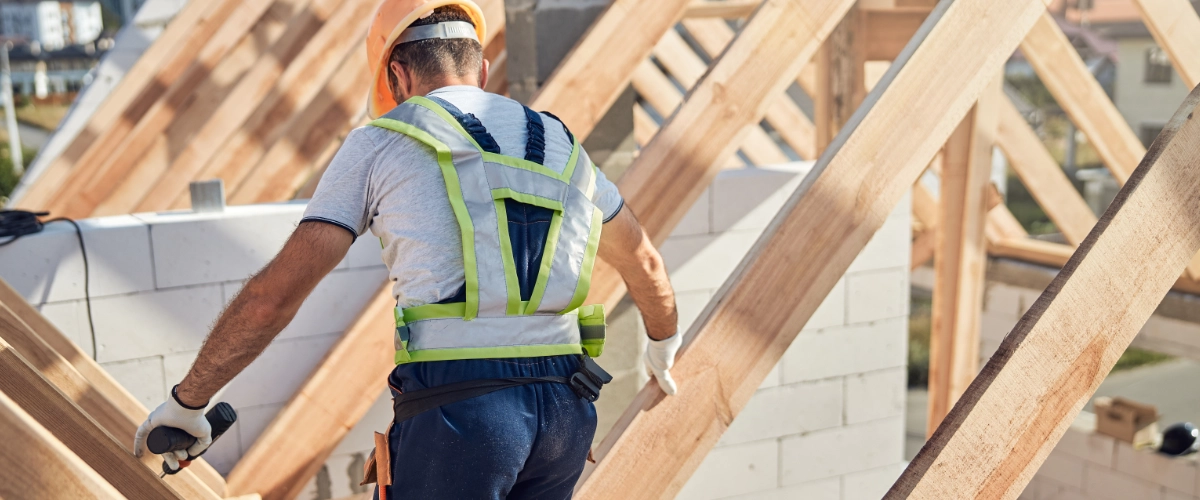
In the demanding world of construction, few decisions carry as much weight as selecting the right construction lumber wood. One misstep in grade, species, or moisture content can lead to warped frames, structural weaknesses, or costly rework. Intermediate builders, you know the frustration of sifting through stacks of lumber at the yard, only to question if that premium Douglas fir truly outperforms Southern pine in your next framing job.
This analysis demystifies construction lumber wood, stripping away the confusion surrounding grading systems, kiln-drying processes, and defect allowances. You will gain clarity on how to evaluate softwoods versus hardwoods for load-bearing applications, decode stamp markings like #2&BTR or SEL STRUC, and optimize costs without sacrificing integrity. We examine real-world performance data, common pitfalls in storage and handling, and emerging standards from bodies like the American Lumber Standard Committee.
By the end, you will confidently specify construction lumber wood that aligns with your project’s timelines, budgets, and building codes. Arm yourself with this knowledge, and elevate your builds from good to exceptional.
What Defines Construction Lumber Wood
Construction lumber wood, also known as dimensional or framing lumber, consists of softwood pieces sawn to standard sizes like 2x4s and 2x6s for load-bearing structural applications in residential and commercial builds. These materials dominate framing for walls, floors, roofs, joists, and trusses due to their reliable performance under stress. Unlike hardwoods, softwoods offer an optimal strength-to-weight ratio, making them lighter yet robust enough for high-volume use while keeping costs low; for instance, kiln-dried Hemlock-Fir provides exceptional framing strength from sustainable Pacific Northwest sources, as offered by suppliers like Prime Forest.
Primarily from Softwoods for Structural Framing
Softwoods such as pine, fir, spruce, and hemlock lead construction lumber wood production because of their rapid renewability, workability, and economic edge over dense hardwoods reserved for furniture or flooring. Wood species and grading details highlight Douglas Fir’s density for beams and Ponderosa Pine’s texture for versatile framing. Machine Stress Rated (MSR) grading ensures modulus of elasticity and bending strength, critical for safety. Builders benefit from this by selecting No. 2 grades with tight knots that maintain integrity without premium pricing.
Distinction from Appearance Lumber
Unlike finish lumber prioritized for aesthetics in trim or paneling, construction grades tolerate more knots, checks, and wane since they hide in structural frames of homes, barns, and decks. Standard 2×4 studs and 2×6 joists in No. 2 or Stud grades support vertical and horizontal loads effectively. Lumber grades overview notes Select Structural for headers demands fewer defects, but economy grades suffice for most projects, reducing waste and costs.
US Market Role Amid Housing Shortfall
A 5.5 million unit US housing deficit fuels demand for consistent construction lumber wood supplies, with softwood market projected at $450 billion by 2033 (CAGR 2.9%). Spot prices hover around $581 per 1,000 board feet as of April 2026, tightening amid mill closures and tariffs. Reliable sources like Prime Forest’s eco-certified Hemlock-Fir ensure builders meet deadlines.
Versus Engineered Products
Sawn lumber forms the base for Glulam (parallel layers for beams) and CLT (perpendicular panels for walls), offering superior stability over variable sawn pieces yet at higher processing costs. Structural lumber insights emphasize sawn wood’s role in 70-80% of residential framing, ideal for cost-effective decks and barns before scaling to mass timber innovations. Opt for sawn for standard builds to balance budget and performance.
Leading Softwood Species in Construction
Softwood species form the backbone of construction lumber wood, providing the structural integrity needed for framing, trusses, sheathing, and beyond in residential and commercial projects. With U.S. softwood production hitting around 36 billion board feet in 2024 and forecasts showing a modest 0.4% growth in 2026 amid stabilizing housing starts at 1.36 million units, these materials balance strength, sustainability, and cost-effectiveness. Builders face tighter supplies from tariffs on imports (over 45% duties) and regional production shifts, pushing prices up 3-10% for Western species. Selecting the right species optimizes performance while supporting eco-friendly practices, as seen in family-owned suppliers like Prime Forest delivering certified Hemlock-Fir and Ponderosa Pine. Below, we analyze the leading options based on strength, workability, and market trends.
Hemlock-Fir
Hemlock-Fir, sustainably sourced from second- and third-growth forests in the Pacific Northwest and Canada, stands out for its high strength-to-weight ratio ideal for framing applications. This species group combines Western Hemlock with true firs, offering excellent dimensional stability and resistance to warping, which makes it perfect for trusses, joists, rafters, and sheathing. According to Western Wood Products Association (WWPA) standards, #1 and #2 grades meet stringent span tables for structural light framing, supporting loads in residential builds with minimal deflection. Its light color and fine grain also suit appearance-grade uses like interior millwork. In 2025, prices rose 4-10% due to demand shifting from tariff-impacted imports, yet abundant supply ensures reliability for green building projects. Actionable insight: Specify WWPA-certified Hemlock-Fir from suppliers like Prime Forest for LEED-compliant framing to cut waste and enhance longevity.
Ponderosa Pine
Ponderosa Pine delivers superior workability and a uniform texture that excels in both framing and finish applications like trim, paneling, and doors. Harvested from Inland West regions such as Idaho and Oregon, it resists warping in diverse climates thanks to its even cell structure and moderate density. WWPA grades it for structural dimension lumber, where #2 pieces handle wall framing and decking spans up to 16 inches on center. Its Janka hardness of 460 lbf prioritizes machinability over extreme loads, making it economical for renovations amid 2026 log shortages. Prime Forest’s Ponderosa Pine, with its smooth milling and stain-ready surface, boosts project aesthetics without compromising utility. Builders should opt for kiln-dried stock to maximize stability in humid environments.
Spruce-Pine-Fir (SPF)
Spruce-Pine-Fir (SPF) provides lightweight, affordable options for residential framing, dominating 2×4 studs and #2 grade joists due to its high strength-to-weight ratio. Sourced mainly from Canada and the northern U.S., it features tight knots and excellent nailing properties but lower density than Hemlock-Fir, limiting it to lighter structural roles. NLGA standards support its use in trusses and pressure-treated outdoor framing, with 2025 prices surging 14% from mill closures and duties. For details on SPF grades and uses, see SPF lumber facts and industry insights. As imports drop 9%, domestic alternatives gain traction. Insight: Pair SPF with denser species for hybrid framing in multi-family housing to balance cost and performance.
Southern Yellow Pine (SYP)
Southern Yellow Pine (SYP) thrives in heavy-load Southern U.S. builds, its dense resin-rich structure excelling in floor joists, headers, and beams. From species like Loblolly and Longleaf, it bends and compresses better than SPF, with treatment compatibility ideal for outdoor decks and posts. Southern capacity exceeded 28.4 billion board feet in 2024, tempering price gains to 4% despite export surges. High-wind zones benefit from its weight-bearing prowess. Forecasted 2026 growth favors SYP as an SPF substitute. Tip: Select treated SYP #2 Prime for coastal decks to resist decay and meet IRC codes.
Douglas Fir
Douglas Fir offers versatile performance for structural beams, boasting top-tier modulus of elasticity and nail-holding amid tightening Pacific Northwest supplies. Oregon leads production at 5.1 billion board feet annually, supporting glu-lams and heavy framing. WWPA highlights its seismic resilience and decay-resistant heartwood. For more on its dominance, check Oregon’s top softwood lumber production. Prices climbed 4-10% in 2025 from supply constraints. Strategy: Use Select Structural grades for exposed beams in mass timber projects to leverage availability and strength. These species address the U.S. housing shortfall of 5.5 million units by enabling efficient, sustainable construction.
Understanding Lumber Grading for Quality
Lumber grading is essential for ensuring the reliability and performance of construction lumber wood, particularly softwoods like Hemlock-Fir and Ponderosa Pine used in framing and structural elements. This process categorizes wood based on strength, appearance, and defects, allowing builders to select materials that balance cost, safety, and efficiency. Governed by the American Softwood Lumber Standard (PS 20), grading prevents failures in load-bearing applications while supporting sustainable practices.
Visual Grading: Balancing Imperfections and Economy
Visual grading involves trained inspectors evaluating knots, cracks, straightness, slope of grain, and other defects on all four sides of each board. Common grades include No. 1, with small tight knots and good appearance, and No. 2, the standard for residential framing, which permits larger but well-spaced knots, minor cracks, and limited wane. Construction-grade lumber like No. 2 offers cost savings, often 10-20% less than premium options, without sacrificing safety when designed per building codes such as the International Residential Code (IRC). For instance, No. 2 Hemlock-Fir 2x6s handle typical joist spans up to 12 feet under standard loads. See detailed grading explanations at how lumber is graded and SPIB lumber grading rules.
Machine Stress Rated (MSR) Lumber: Precision Through Technology
MSR lumber employs machines to measure stiffness (modulus of elasticity) and bending strength via deflection tests, assigning precise values like 2400f-2.0E. This technology surpasses visual methods by reducing variability by 20-25%, making it ideal for engineered trusses, joists, and glulam beams where predictability is critical. Each piece meets No. 2 visual minimums but delivers higher design values, minimizing over-specification in modular builds.
WWPA and SPIB Standards: Compliance and Waste Reduction
Agencies like the Western Wood Products Association (WWPA) and Southern Pine Inspection Bureau (SPIB) enforce rules through grade stamps detailing species, grade, and moisture content. Higher grades such as Select Structural or MSR cut waste in prefab construction by 50-90%, as precision defects allow tighter factory cuts. Explore modular construction trends for efficiency gains.
Premium MSR carries a 20-30% price premium over No. 2 visual grades in 2026 spot markets, where framing lumber averages $500-870 per thousand board feet amid stabilizing demand. Select grades by load: Stud grade for non-bearing walls, No. 2 for general framing, and Select Structural or MSR for beams and headers. Consult span tables in the National Design Specification (NDS) to match requirements precisely, optimizing projects with Prime Forest’s sustainable options.
Primary Applications of Construction Lumber
Framing Walls, Floors, and Roofs
Construction lumber wood excels in framing walls, floors, and roofs, forming the structural skeleton of residential and commercial buildings. Softwoods account for over 80% of lumber used in residential framing, with wood framing comprising 94% of all single-family homes completed in the U.S. in 2024, according to NAHB Eye on Housing data. Dimensional sizes like 2x4s and 2x6s serve as studs, joists, and rafters, spaced 16 to 24 inches on center to support loads while allowing space for insulation and utilities. For energy-efficient builds, opting for 2×6 or larger dimensions accommodates thicker insulation, achieving R-20+ wall values and reducing thermal bridging to comply with stringent codes. In 2026, as housing starts rebound to 1.50 million units amid a 5.5 million unit shortfall, U.S. softwood consumption for new housing is projected to hit 18.8 billion board feet, underscoring demand for species like Prime Forest’s Hemlock-Fir.
Sheathing and Subflooring
Sheathing and subflooring rely on Hem-Fir panels for their superior stability and shear strength, particularly in hurricane-prone regions. These panels, often plywood or OSB, install perpendicular to framing with precise gaps for expansion, enhancing racking resistance and wind-load performance as detailed in the U.S. Forest Service Wood Handbook. In high-velocity zones, Hem-Fir meets Florida Building Code standards for unbraced walls up to 8 feet 6 inches, with enhanced nailing boosting wind resistance by 2-3 times. Prime Forest’s sustainable Hemlock-Fir provides exceptional nail-holding and dimensional stability, ideal for subfloors that endure foot traffic and moisture fluctuations during construction.
Outdoor Structures
Treated construction lumber wood powers durable outdoor structures like decks, sheds, and pergolas. Ponderosa Pine and Southern Yellow Pine (SYP), pressure-treated for deep preservative penetration, resist decay, insects, and moisture for decades, per USDA durability tests. Prime Forest’s treated Ponderosa Pine offers excellent wear resistance for joists spanning 16-24 inches and decking, minimizing warping through kiln-drying and proper installation.
Non-Structural Applications
Beyond structure, construction lumber wood shines in non-structural roles like trim, paneling, and wainscoting, where workability and fine grain elevate aesthetics. Ponderosa Pine’s smooth texture accepts stains and paints seamlessly, transitioning naturally to furniture components. Builders favor kiln-dried pieces for straightness in custom millwork.
Mass Timber Integration
Construction lumber wood forms the foundation for mass timber innovations like cross-laminated timber (CLT) in mid-rise sustainable projects. Kiln-dried boards layer into panels for floors and walls, enabling Type IV-A construction up to 12 stories with lower carbon footprints. The CLT market surges from $1.55 billion in 2026 to $4.63 billion by 2034 at 14.4% CAGR, as seen in WoodWorks’ 1,536 influenced projects covering 62 million square feet. Prime Forest’s eco-friendly softwoods position projects for green certifications.
2026 Construction Lumber Market Overview
The construction lumber wood market in 2026 reflects a period of stabilization after years of volatility, with global demand buoyed by housing recovery and infrastructure projects. Valued at USD 14,500.75 million in 2025 as a baseline, the overall lumber market continues its expansion, while the softwood segment, critical for framing and structural uses, is projected to grow from USD 350 billion in 2024 to USD 450 billion by 2033 at a 2.9% CAGR. This growth stems from urbanization in emerging markets and renewed residential activity in developed regions, where softwoods like Hemlock-Fir and Ponderosa Pine dominate due to their sustainability and workability. Supply constraints, including mill curtailments and logistics challenges, support price firmness, with framing lumber averaging USD 484 to USD 534 per thousand board feet (MBF) early in the year. For stakeholders, this signals opportunities in eco-certified supplies to meet green building standards. Fastmarkets’ 2026 predictions highlight how production discipline will sustain these trends.
North American Production and Demand Stabilization
US softwood lumber production saw a slight decline of less than 1% from 2024 to 2025, driven by capacity reductions exceeding 1.3 billion board feet amid low margins and fiber shortages. North America, however, anticipates demand stabilization with 0.4% growth, as consumption reaches 59.9 billion board feet, up 0.7% regionally. Falling interest rates bolster this, though weak repair spending tempers gains. Prices reflect tighter supply, with futures at USD 550 to USD 557/MBF in late 2025 and spot prices around USD 581/1,000 board feet by April 2026. Builders should monitor regional shifts, favoring domestic sources like Pacific Northwest Hemlock-Fir for reliability. Market Reports World lumber analysis underscores the role of tariffs in reshaping supply chains.
Housing Shortfall and Segment Shifts
A US housing shortfall of 5.5 million units intensifies demand for residential construction lumber wood inputs, with single-family starts projected to rise 1.5% to 1.36 million while multifamily dips 5%. Repair and remodel (R&R) activity offsets softer new starts, fueled by lower rates and home equity lines, potentially driving 15,000 board feet per average home renovation. This dynamic favors durable softwoods for trusses and sheathing.
Softwood Dominance in Framing
Softwoods command over 70% of the framing market, bolstered by post-tariff availability as Canadian import duties hit 45%, reducing foreign supply and elevating US output. This positions species like Ponderosa Pine for trim and paneling in sustainable projects. Procurement teams can leverage certified suppliers for cost-effective, compliant materials amid volatility.
Pricing Trends and Volatility in 2026
In April 2026, spot prices for construction lumber wood hovered at USD 581.05 per 1,000 board feet, marking a 5.13% monthly decline yet showing year-to-date gains amid persistent market volatility. This snapshot, drawn from the Random Lengths framing composite benchmark, reflects daily fluctuations of less than 1% alongside broader swings influenced by subdued housing starts and stabilizing supply chains. Despite the recent pullback to four-week lows near USD 575/MBF, prices remain resilient with approximately 3% YTD appreciation, positioning the market for potential rebounds tied to seasonal demand. Builders navigating this landscape must monitor these trends closely, as current lumber futures data underscores the choppy trading environment driven by economic uncertainties.
Framing lumber averages stood at USD 872.03/MBF in January 2026, down slightly from late 2025 peaks but up year-over-year, setting the stage for a volatile year. Forecasts project prices trading in the USD 484-650/MBF range through 2026, with mid-year upticks anticipated to reach USD 587/MBF by end-Q2 due to recovering housing demand projected at 1.5 million starts. Analysts highlight upside risks from supply gaps, with historical charts showing similar patterns of quarterly spikes; for instance, Q2 2026 saw a 5.11% quarter-over-quarter rise in some regions. These projections emphasize the need for strategic planning in sourcing softwoods like Hemlock-Fir for framing applications.
Key factors fueling this volatility include tighter supply from production discipline, where North American mills have curtailed output by over 1.3 billion board feet through closures and low operating rates. Weather disruptions, such as harsh winters delaying starts, compound logistics challenges, while 45% combined duties on Canadian softwood imports add significant costs, equivalent to about USD 9,200 per home. Lumber futures for December 2025 settled at USD 550-557/MBF, signaling cautious optimism tempered by these pressures. Sustainable producers prioritizing eco-friendly softwoods, such as Ponderosa Pine from managed forests, offer stability amid these headwinds.
Regional variances highlight pricing disparities, with SPF 2x4s trading at around USD 510/MBF in Western markets and SYP dimensionals nearer USD 400/MBF in the South, reflecting local supply dynamics and freight costs. Builders can optimize budgets by securing bulk purchases from sustainable sources, negotiating on secondary inventories to lock in lower rates without compromising quality.
For risk mitigation, hedging strategies prove essential given 3% YTD increases and ongoing logistics risks like truck shortages. Builders should lock prices early through CME futures, options, or OTC swaps to establish price floors 3-12 months ahead, protecting margins on projects reliant on construction lumber wood. Historical lumber price charts illustrate the value of these tools in past volatile periods, enabling proactive inventory management and cost predictability.
Sustainability Driving Construction Lumber Choices
Sustainability has emerged as a pivotal factor in selecting construction lumber wood, particularly softwoods like Hemlock-Fir and Ponderosa Pine, as builders prioritize low-carbon, responsibly sourced materials amid stringent green building standards. In 2026, the global sustainable wood products market reaches approximately $150 billion, growing at a 7% CAGR through 2033, with softwoods holding a 75.1% share due to their renewability and carbon sequestration potential. Regulatory pressures and consumer demands are accelerating the shift toward certified products, enabling projects to achieve certifications like LEED. This trend not only mitigates environmental impact but also enhances project value in competitive bids. Builders can leverage these attributes by specifying certified lumber early in design phases to streamline compliance.
Rise in FSC/PEFC-Certified Softwoods and 2:1 Tree Planting Programs
FSC and PEFC certifications cover nearly 300 million hectares globally, representing 71% of certified forests, with demand for certified softwoods surging to support mass timber projects numbering 1,860 in the U.S. by mid-2023. PEFC endorses over 29,800 chain-of-custody companies, ensuring one-third of global certified wood meets standards against illegal logging. Programs like 2:1 tree planting, where two trees are planted for every one harvested, further bolster eco-credentials; for instance, donations to regional, species-matched replanting, including indigenous-led initiatives, amplify forest regeneration. These measures align with LEED v5 updates rolling out in 2026, awarding points in Building Design + Construction and other credits for responsible sourcing. Actionable insight: Specify dual-certified Hemlock-Fir in RFPs to gain 2-4 LEED points, improving bid success rates by 15-20% in green markets.
Mass Timber Innovations: CLT and Glulam from Hemlock-Fir
Cross-Laminated Timber (CLT) and Glued-Laminated Timber (Glulam) made from Hemlock-Fir are transforming mid- and high-rise construction, slashing carbon footprints by 22-50% compared to steel or concrete, with some studies citing up to 45% reductions in eight-story buildings. Hemlock-Fir stores about 985 kg CO₂ equivalent per cubic meter while emitting only 159-206 kg cradle-to-gate, yielding a net negative impact of -784 kg CO₂ eq/m³. Its low density, high strength (modulus of rupture at 9,800 psi), and stability make it ideal lamstock for these engineered products, as validated by British Columbia research clearing technical barriers. Every cubic meter of wood sequesters 0.9-1 tonne of CO₂, making mass timber a cornerstone for net-zero goals. Builders should evaluate Hemlock-Fir CLT for urban infill projects to cut emissions and accelerate timelines by 20-30%.
Repair/Remodel Growth and Prefab Surge Favoring Lumber
Repair and remodel (R&R) spending propels 2026 lumber demand, growing 2.5-3% annually and reaching over $420 billion by 2033, outpacing new construction due to aging U.S. homes and energy incentives. Durable, renewable softwoods like Ponderosa Pine outperform composites with lower embodied energy, ongoing carbon storage, and resilience in varied climates. Amid the prefab market’s expansion to $251.9 billion by 2030 (7.2% CAGR), modular wood systems emphasize sustainability over synthetic alternatives. This favors low-grade lumber for OSB and panels in multigenerational remodels. Practical step: Opt for Ponderosa Pine trim in R&R to reduce long-term maintenance costs by 25% versus composites.
Prime Forest’s Family-Owned Sustainability Focus
As a third-generation family-owned operation processing 18-22 million board feet annually, Prime Forest differentiates through custom Hemlock-Fir and Ponderosa Pine for niche B2B applications like doors, millwork, and exports. Unlike high-volume retail sellers, it provides precision remanufacturing (sawn to 1/32″ tolerances, custom grades/patterns) with FSC/PEFC/SFI certifications on 75% of sales, 2:1 planting, and CDP carbon tracking. This “people, planet, partnerships” ethos ensures supply reliability. Certifications boost LEED-driven bids while stabilizing chains against tariffs and wildfires, with prices rising 13-21%. Specify Prime Forest products for verifiable sustainability in proposals.
Evaluating Suppliers for Construction Lumber
Retail Giants: High-Volume Options with Price Advantages
Retail giants like Home Depot and Lowes provide abundant construction lumber wood, focusing on commodity-grade Spruce-Pine-Fir (SPF) for framing and Western Red Cedar for decking and siding. Standard dimensions such as 2x4x8 SPF boards retail at $3.50 to $5.50 each, offering competitive pricing for small to medium orders due to massive scale and no minimum order quantities (MOQs). Lead times are minimal at 0 to 2 days for in-store pickup or delivery, ideal for quick projects. However, sustainability takes a backseat; while they source 60 to 80 percent certified wood under FSC, SFI, or PEFC standards, traceability and variety remain limited compared to specialized channels. In 2026’s tightening market, with framing lumber futures at $500 to $600 per thousand board feet (MBF), their import-heavy stock exposes buyers to tariff risks and potential shortages.
Specialty Providers: Diversity and Customization
Specialty providers such as Collins Pine and Rex Lumber offer broader species selections beyond SPF and cedar, including White Fir, Lodgepole Pine, and Douglas Fir for construction applications. Both hold strong FSC certifications across their chains, enabling custom kiln-drying, precise cuts, and millwork like mouldings with over 60,000 profiles. Shipping from regional facilities ensures 1 to 4 week lead times, outperforming retail for mid-volume needs via dedicated fleets that minimize delays. Wholesale pricing undercuts retail by 10 to 30 percent for bulk buys, with flexible MOQs through stocking programs. These attributes suit complex builds requiring non-standard dimensions amid 2026 supply constraints from reduced sawmill rates.
Family-Owned Remanufacturers: Precision for Builders
Family-owned remanufacturers like Prime Forest specialize in eco-friendly Hemlock-Fir and Ponderosa Pine, remanufacturing for superior grading and surfacing to 1/32-inch tolerances. These softwoods excel in framing, trim, and paneling, with 2:1 replanting ratios enhancing carbon sequestration and FSC/PEFC availability. Flexible MOQs from unit quantities and 2 to 4 week lead times support intermediate builders avoiding primary mill waste. Domestic sourcing bolsters reliability in a year of wildfires and logistics issues.
Key Metrics for 2026 Decisions
Evaluate suppliers using certifications (FSC/PEFC for LEED points), lead times (under 4 weeks), and MOQs (flexible for scale). Amid 85 to 90 percent operating rates and rising prices to $872/MBF by January 2026, prioritize remanufacturers for waste reduction and U.S. softwoods.
Intermediate builders benefit from these options’ quality and workability, delivering stable Hem-Fir/Ponderosa performance at $0.80 to $1.50 per board foot without hardwoods’ premiums, aligning perfectly with repair-remodel growth.
2026 Outlook and Innovations Ahead
As of early 2026, the construction lumber wood market anticipates tighter supply dynamics, with over 1.3 billion board feet of capacity reductions from mill closures in British Columbia and the U.S. South. This stems from weak margins, fiber shortages, and lingering post-2021 demand slumps, limiting production growth to just 2 percent despite slight improvements in operating rates. Analysts from Fastmarkets forecast modest price rises mid-year, pushing framing lumber into the mid-$500s to low-$600s per 1,000 board feet range, with potential Q2 spikes amid seasonal strength. Demand holds steady, supported by U.S. housing starts projected at 1.36 to 1.5 million units, a 1.5 to 8.9 percent increase from 2025. Falling mortgage rates, averaging 6 percent in March and possibly dipping to the high-5 percent range, fuel pent-up millennial demand and offset labor shortages and persistent tariffs, including 10 percent Section 232 duties on Canadian imports.
Modular and Prefab Boom Favoring MSR Grades
The surge in modular and prefabricated construction addresses acute labor gaps, projected at 349,000 workers in 2026, and reduces project delays affecting 76 percent of jobs. This trend boosts lumber efficiency through off-site assembly, elevating demand for Machine Stress Rated (MSR) grades prized for their precise stiffness and strength in framing components like Hemlock-Fir 2x4s. The U.S. wood modular market, valued at $15.2 billion in 2024, aligns with global prefab growth to $180.3 billion by year-end, promoting sustainable softwoods from suppliers like Prime Forest.
Innovations in Engineered Softwoods and R&R Growth
Engineered softwoods, such as cross-laminated timber (CLT) and glulam from species like Ponderosa Pine, enable taller wood buildings up to 18 stories under evolving codes, with the market expanding at a 4.67 percent CAGR through 2034. Repair and remodel (R&R) segments outpace new builds, growing over 5 percent long-term via aging housing stock, energy incentives, and home equity lines amid lower rates, favoring durable, eco-certified lumber.
Risks, Opportunities, and Strategic Preparation
Weather events like El Niño fires or Southeast storms, alongside geopolitical tensions and trade elections, pose risks to supply chains. Yet, certified imports offer opportunities for green building premiums. Builders should diversify sources, secure forward contracts now while prices bottom, and stockpile for Q2 peaks, as Fastmarkets advises, ensuring resilience with high-quality, sustainable options like Prime Forest’s Hemlock-Fir. This proactive stance positions stakeholders for 3.1 percent market growth amid stabilization.
Key Takeaways and Next Steps for Builders
For builders navigating the 2026 construction lumber wood market, prioritize Hemlock-Fir or Ponderosa Pine for framing projects due to their superior strength-to-weight ratio and sustainable sourcing from managed Pacific Northwest forests. These species deliver reliable performance in walls, floors, and roofs while minimizing environmental impact. Always verify grading standards, selecting Machine Stress Rated (MSR) lumber for critical load-bearing elements; this approach optimizes costs amid averages surpassing USD 500/MBF, as seen in recent Fastmarkets forecasts ranging USD 484-650/MBF.
Monitor price trends via NAHB indices and Fastmarkets reports, where spot prices hit USD 581/1,000 board feet in April 2026 amid tighter supply. Secure quotes early from certified suppliers to lock in rates before mid-year rises. Embrace FSC-certified options to boost bids in green builds, and contact Prime Forest for tailored Hemlock-Fir or Ponderosa Pine eco-lumber.
Build inventory buffers against weather and logistics risks, while integrating cross-laminated timber (CLT) for low-carbon, innovative structures that reduce emissions by up to 45% compared to steel.
Conclusion
In wrapping up, remember these core takeaways: decode lumber grades and stamp markings like #2&BTR or SEL STRUC to ensure quality; choose the right softwood species and kiln-dried moisture content for load-bearing strength; avoid common pitfalls in storage and handling that lead to warping; and optimize costs using real-world performance data from standards like those from the American Lumber Standard Committee.
This guide empowers intermediate builders to sidestep confusion, eliminate guesswork, and deliver robust, reliable structures without unnecessary expenses.
Arm yourself with this knowledge today. Visit your local yard, inspect with precision, and specify lumber that stands the test of time. Your next project deserves nothing less; build boldly and confidently.